The collaboration between Krafsht and Pauline Bricout, formerly known as PowArtCom, has been rooted in a strong and deliberate vision from the outset. One reference recurs and structures the work: the universe of H. R. Giger, creator of the Xenomorph. This figure of the “monster” acts as a symbolic anchor, not for its horrific aspect, but for what it embodies in terms of singularity, artistic coherence, and creative freedom. It provides a key to understanding the approach developed around Pauline Bricout’s project.
This visual culture, nourished by the Alien saga in all its variations, allowed for the establishment of common ground, made up of shared references and a deliberate intention not to homogenize the artist’s identity. The goal was not to standardize her universe, but rather to offer it a structured framework capable of making it legible, accessible, and sustainable in a digital environment.
The first step in our intervention was to re-establish a clear and functional digital presence. This involved creating the website PowArtCom and then evolving it into the current version of Pauline Bricout. Beyond the visual aspect, priority was given to structuring the content. The goal was to lay solid foundations capable of accommodating the diversity of Pauline’s productions without diluting them.
An editorial framework was then developed to categorize the different projects. Music videos were identified as a central focus for artistic dissemination. The “First Doses,” a concept conceived as a sample of collaborations, were highlighted as an accessible entry point for new partners. Side projects, such as Tapopow and Wopopat, found their place within an architecture designed to showcase the richness and variety of the creative universe without creating confusion.
This structure allowed the two main narrative threads that run through Pauline Bricout’s work to emerge clearly. On one hand, there’s a world that could be described as a magical forest, populated by recurring figures like Elo the little deer, hamsters, mushrooms, and the Popows, engaged in playful and educational stories, such as learning the alphabet. This collection creates a gentle, colorful, and deceptively naive imaginary world that speaks to different levels of interpretation.
On the other hand, there’s the story of Pat, an anti-heroine confronted with deliberately complex and often absurd situations. This second world explores more ambivalent themes, where humor and strangeness blend with a form of critique of everyday life. The challenge was to allow these two threads to coexist without canceling each other out, giving each its own distinct character while maintaining a coherent overall identity.
Krafsht’s support was never intended to transform Pauline Bricout’s world, but rather to provide a structure capable of supporting it. By organizing the content, clarifying the reading paths, and establishing a stable digital architecture, the project gained coherence and impact, while remaining true to the artist’s identity. This collaboration exemplifies an approach based on respecting the existing imagery, which is then used to create clear, well-structured, and lasting communication.
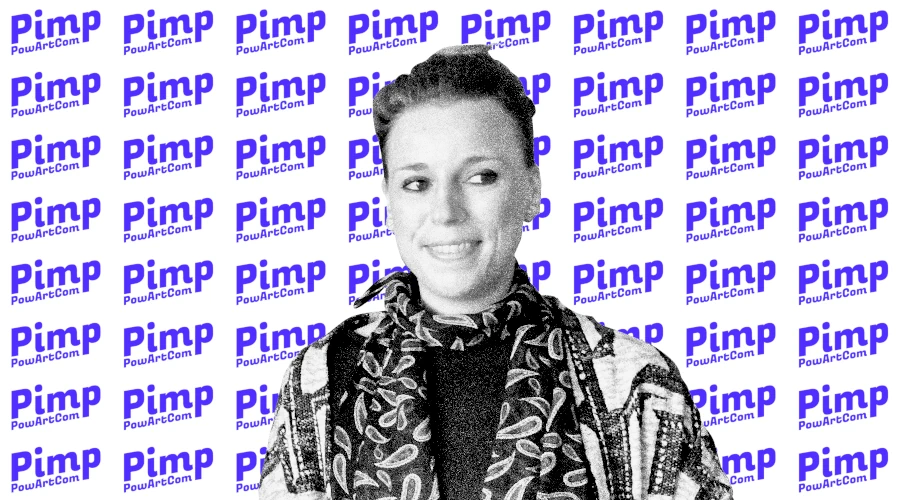
It is also with this in mind that Pimp by Pauline Bricout was created. Its aim is to share knowledge of video formats, their specifications, and constraints for creating music videos. It also serves as a working tool to help with publishing on social media such as Facebook and Instagram, as well as various music platforms like Spotify, Deezer, and YouTube. A section on funding and available grants at the national and regional levels is also available. Of course, you can contact her directly if you have a project in mind!
Pauline-Bricout.fr
Pauline Bricout’s website runs on WordPress, with an “Impératrice” template using Pip’N’Hub. Several subdomains have been created to improve content readability and search engine optimization, such as Tapopow, Pimp, and her Wopopat series.